
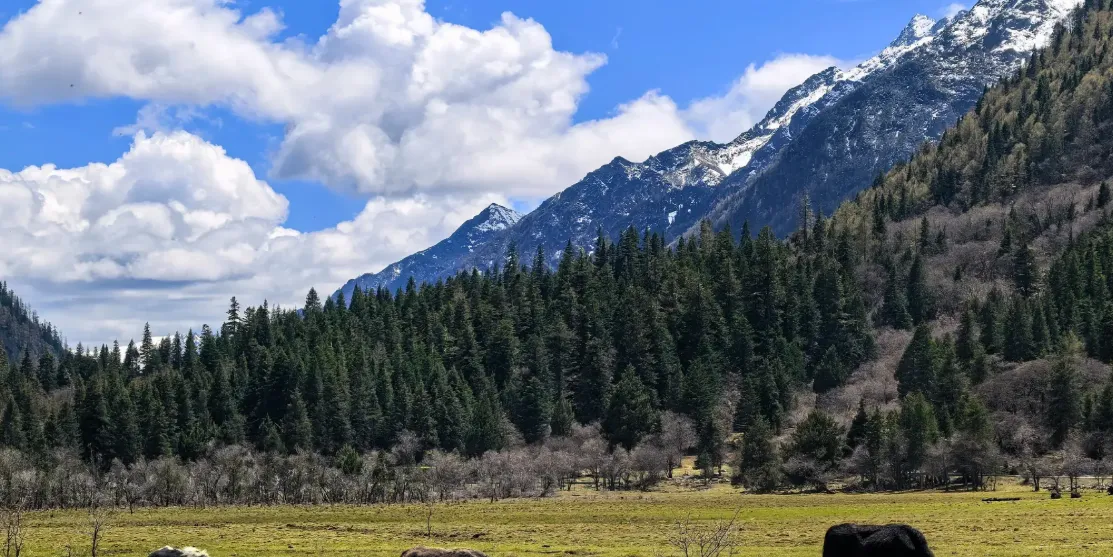
Aba: The Kingdom of Waters
The scenery of Aba Prefecture is defined by 'water.' Jiuzhaigou, Huanglong, Mount Siguniang... every valley holds a miracle.
Jiuzhaigou · The Eye of the Earth
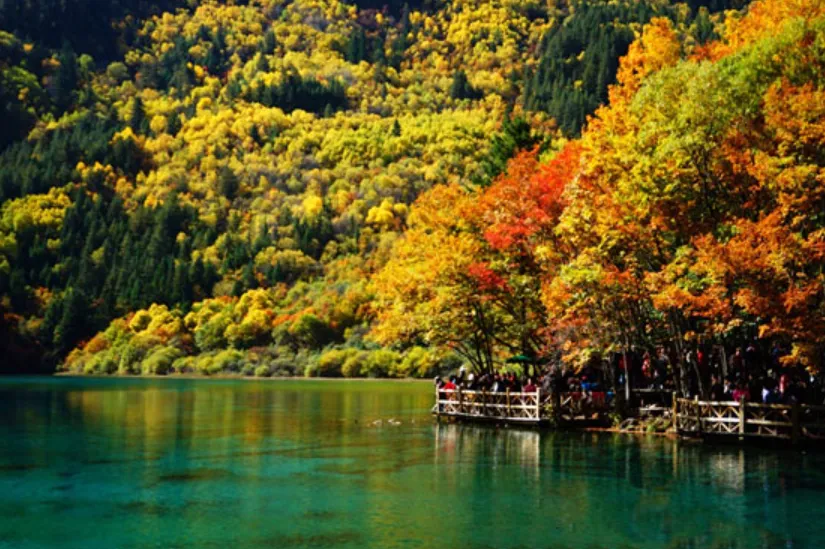
The high-altitude lakes of Jiuzhaigou are locally known as 'Haizi'—they don’t rush like rivers, but rather gaze silently at the sky like the eyes of the earth. The water changes color unpredictably due to minerals and light, shifting between emerald green, turquoise, and golden hues, as if nature had casually brushed its palette. Beneath the surface of Wuhua Sea lie ancient trees lying still on the clear lakebed, forming a submerged primordial forest. The waterfall at Zhenzhu Tan cascades down terraces of travertine, its white splashes resembling countless pearls tumbling down, their sound lingering long in the valleys.
Huanglong · The Rainbow Pools
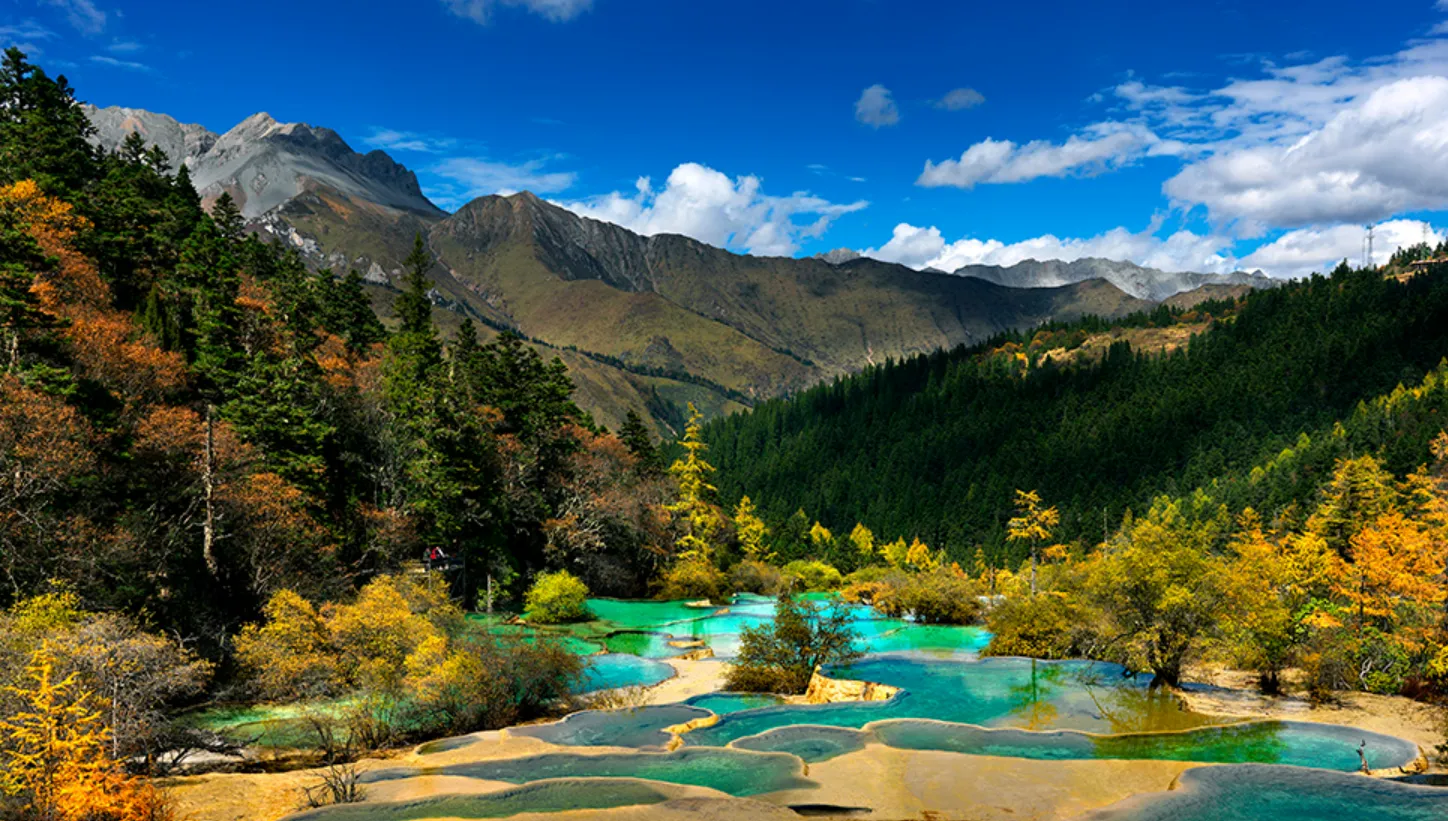
Huanglong is another visual feast. A whole ridge is covered with golden travertine streams, thousands of pools of varying heights spread out layer upon layer, their shapes resembling dragon scales or a row of colorful eyes opened across the land. As sunlight shifts, the pool surfaces shimmer with changing light and shadow—you might even doubt whether you’ve stepped into the mythical Jade Pool of legend.
Mount Siguniang · The Maiden in White
Mount Siguniang consists of four snow-capped peaks standing side by side, like four maidens in white robes guarding this land. The most enchanting section, Shuangqiao Gully, features meadows like green carpets stretching out, gentle streams winding through, and jagged glaciers towering above. Here, you don’t need to venture deep into the wild to feel embraced by the mountains.
Bipeng Gully · Colors of the Four Seasons
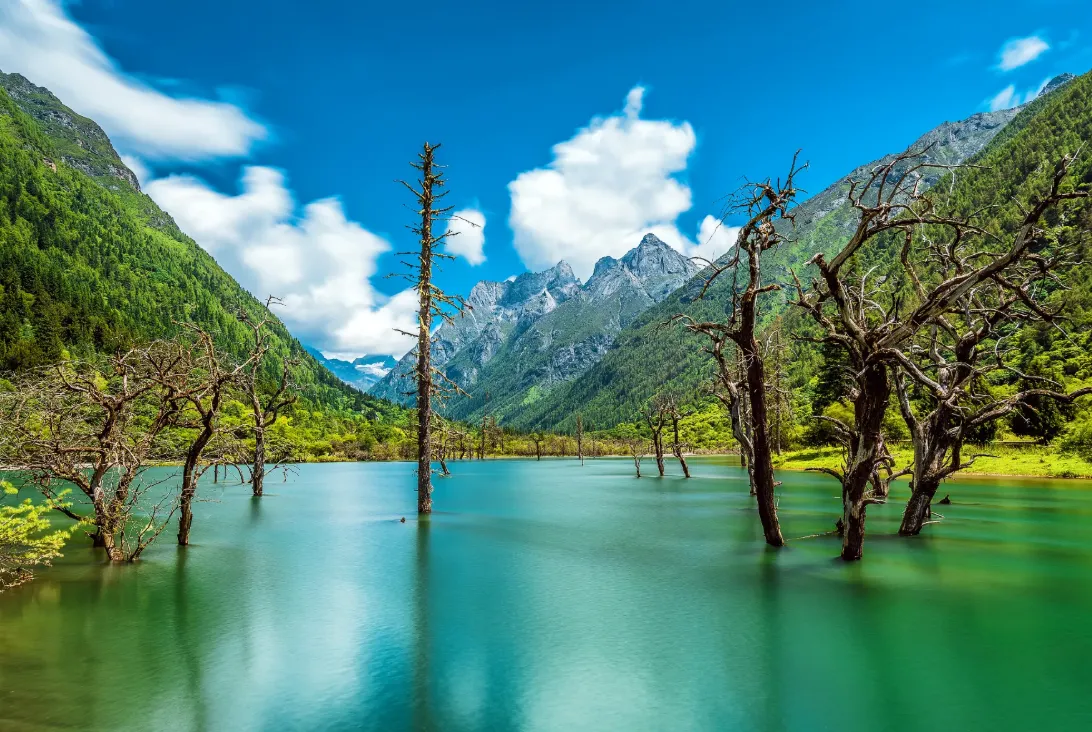
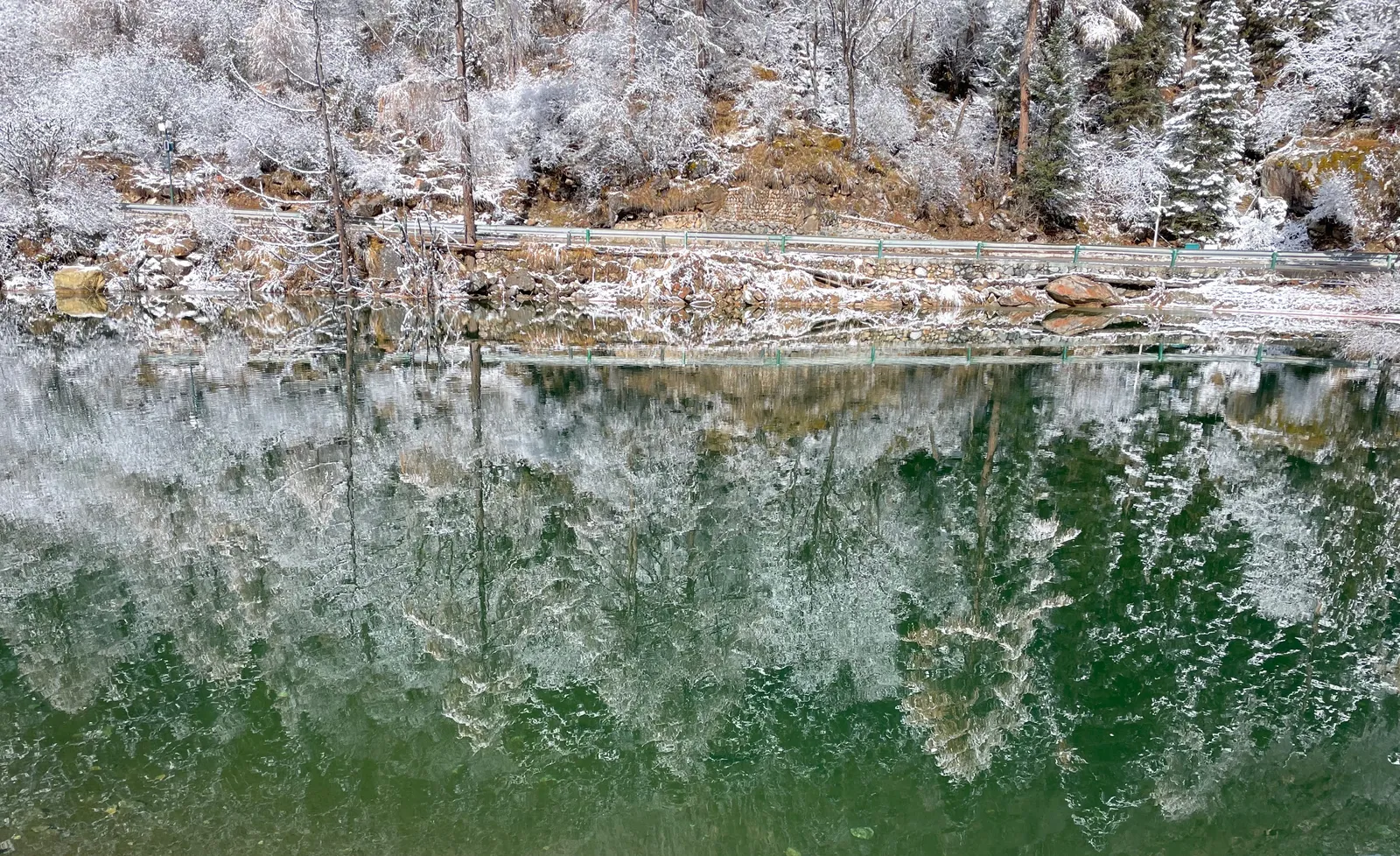
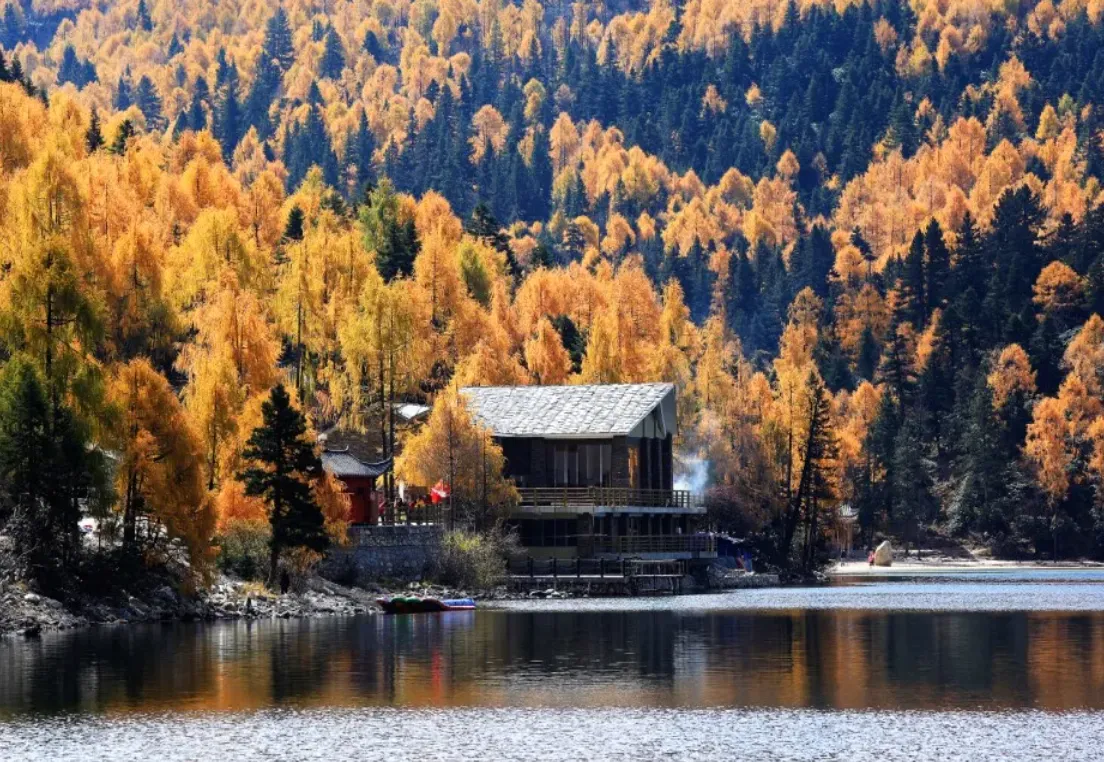
Bipeng Gully gathers the colors of all four seasons. In autumn, the entire gully is set ablaze by red leaves, creating a vivid contrast between golden larches and snow-covered peaks; in summer, wildflowers bloom along the lakeshores, and watching yaks slowly stroll beside the water makes you forget the passage of time.
Wolong · Home of the Panda
If lucky, you may encounter giant pandas in Wolong’s valleys. This is not a zoo—it’s their true natural habitat. Watching a plump panda roll around while hugging bamboo, you’ll realize this is the softest side of the world.

Songpan Ancient City · A Thousand-Year-Old Post Station
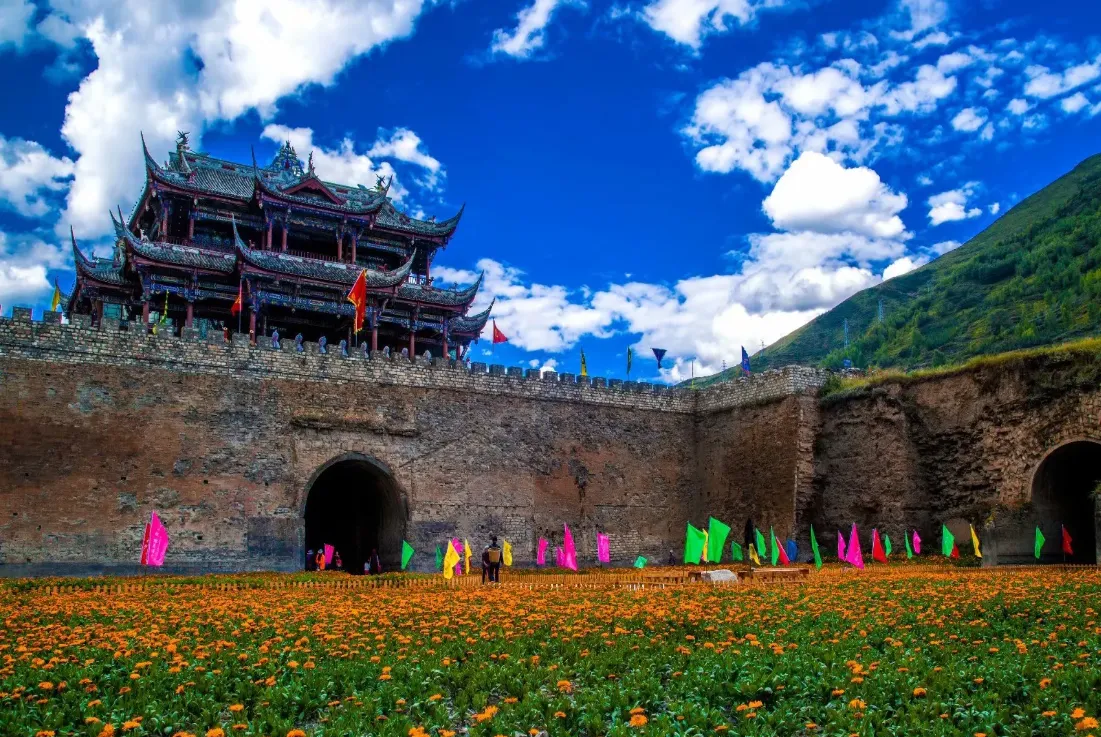
And Songpan Ancient City, nestled within mountain ranges, is a thousand-year-old post station. In the morning, the wind on the city walls carries the scent of butter tea, and the alleyways seem to still echo with the jingling bells of the ancient Tea Horse Road. It’s perfect to pause here overnight during your journey, letting your heart slow down first.
Ganzi: The Land of Mountain Gods
While Aba moves people with water, Ganzi stirs awe with mountains.
Mugecuo · Love Songs of Kangding
Kangding is a city born from love songs, and also the gateway to Ganzi. Mugecuo lies beside it, known in Tibetan as ‘Wild Man Sea.’ On clear days, the lake’s blue is so intense it melts your gaze; the Seven-Colored Sea displays a gradient from bright green to deep blue across the same body of water, depending on temperature. During rhododendron season, the entire valley seems dyed in rouge, paired with distant snow-capped peaks—each frame looks like a movie scene.
Dacheng Yadong · Sacred Hidden Realm
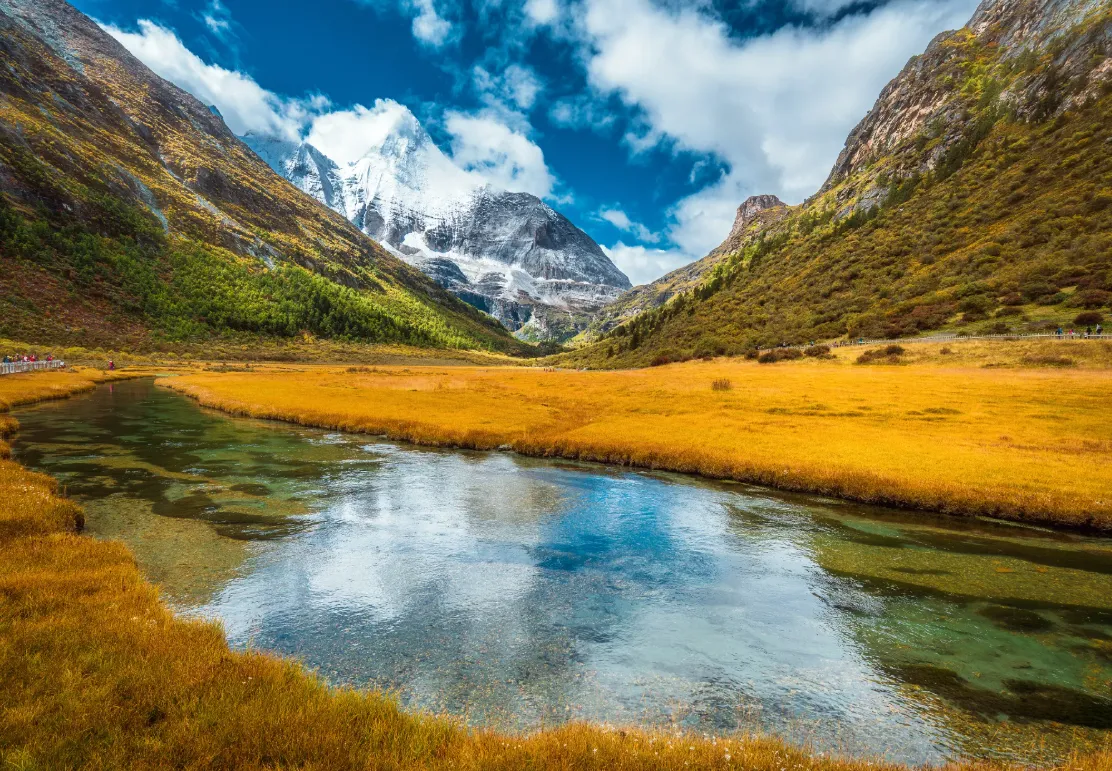
Further south lies Dacheng Yadong, a sacred highland sanctuary revered by Tibetan Buddhism. Three sacred mountains—Xianrainri, Yamaibao, and Xianuoduoji—stand in a 'pin' formation, guarding this land. Their peaks are perpetually covered in snow, sharp and solemn in shape. Hiking upward, you pass through alpine meadows, rocky slopes, and glacial lakes. When you finally stand before the Milk Lake, gazing at its milky-blue waters surrounded by glacial debris, every breath turns silent—not from exhaustion, but from reverence.
Liangshan: The Daughter’s Country by the Lake
From Ganzi’s snow peaks, head south to Liangshan Yi Autonomous Prefecture. Here, the landscape takes on a gentler tone—Lugu Lake, like a blue gem fallen from heaven, rests quietly on the border between Sichuan and Yunnan.
Lugu Lake · The Blue Dream of the Mosuo People
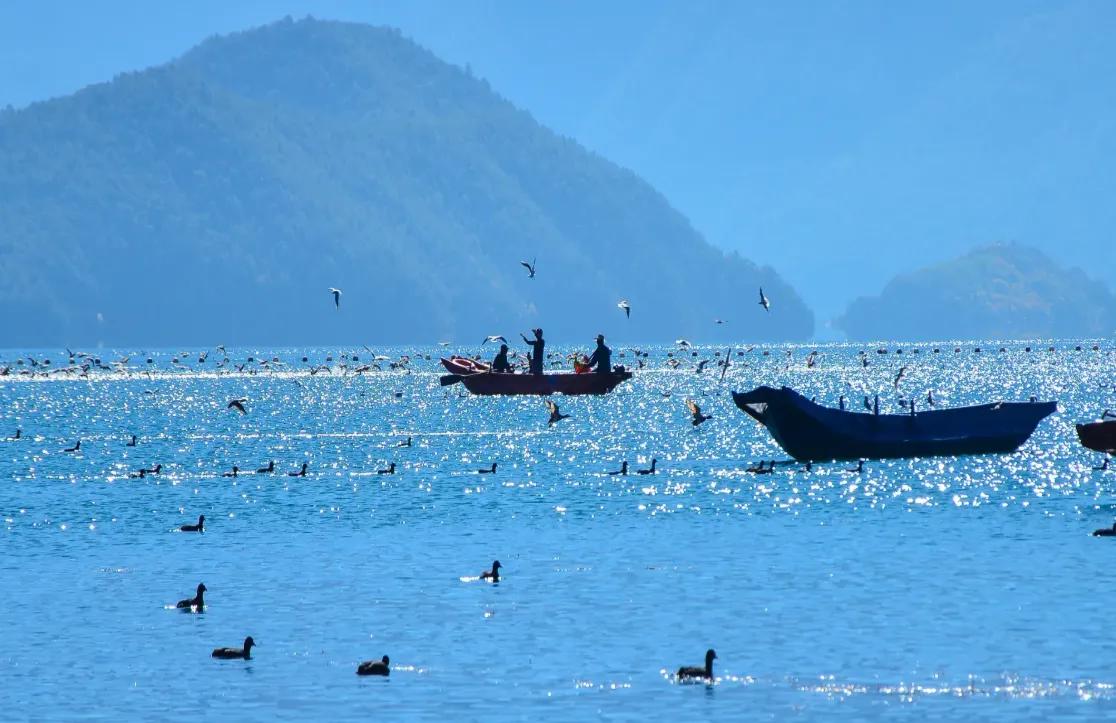
Lugu Lake sits at about 2,700 meters above sea level, with crystal-clear waters visible up to 12 meters deep. In the early morning, a thin mist floats over the surface; wooden rowboats glide across, sending ripples that seem to break the edge of a dream. The reed maze in the lake forms a green labyrinth, and the walking bridge winds through it, connecting villages and fields. The Goddess Ge Mu Mountain reflects in the water—legend says she is the guardian spirit of the Mosuo people.
The Mosuo people live here, preserving China’s unique matrilineal family tradition. The custom of 'walking marriage' adds a mysterious veil to these waters. At night, when bonfires burn by the lakeside, Mosuo girls and boys hold hands and dance, their songs drifting gently through the air. You can stay in a wooden stilt house by the lake—open the window and see the lake and mountains; or learn to row a pigboat, listening to the wind and water under the sun.
The beauty of Lugu Lake isn’t the dramatic snow-capped peaks or glaciers, but a quiet serenity that calms the soul. It’s perfect for slow travel—ideal for sitting by the lake daydreaming, or gazing at the stars and wondering if life could be as pure and clear as this.
Travel Options: How to Explore Western Sichuan and Liangshan
This land doesn’t suit spontaneous trips—it calls for thoughtful steps. From Chengdu, roads twist through canyons and ridges; the views outside the window often make drivers want to stop too.
The most enjoyable way is to rent a jeep or join a small tour group, stopping frequently to capture mountains, yaks, and prayer flags in your camera. If time is short, you can fly directly to Jiuzhaigou-Huanglong or Dacheng Yadong—but you’ll miss the surprises along the way. No matter which option you choose, allow time for your body to adjust to the altitude; don’t let rushing replace traveling.
Spring and autumn are the most captivating seasons. Autumn paints the hills in vibrant foliage, each valley looking like God spilled a paintbox; winter snow turns Western Sichuan into a fairy tale world; spring and summer bring blossoms—rhododendrons and alpine flowers take turns blooming.
Respect and Etiquette
- Turn prayer wheels clockwise. When entering temples, remove your hat. Never photograph Buddha statues or monks without permission.
- In Lugu Lake, respect Mosuo customs and privacy. Do not photograph daily life without consent.
High-altitude sun exposure and cold, steep river valleys—these are real challenges. But when you stand in the wind, hearing the prayer flags fluttering, seeing the sunset gild the snow peaks; when you sit by Lugu Lake and watch moonlight spill across the water—every effort is worth it.
How to Choose Your Itinerary Over Several Days
- Three days: Devote yourself to Jiuzhaigou and Huanglong, immersing your mind and body in the wonders of water and light.
- Five days: Complete the Aba loop—from Wolong’s bamboo forests to Mount Siguniang’s flower fields, then to Bipeng Gully’s autumn colors and the lively atmosphere of Songpan Ancient City.
- Seven days: Reserve for Ganzi and Liangshan. From Kangding’s love songs, to the glaciers of Haorougou, then journey southward, gaze at snow-capped peaks at the foot of Yadong, and finally arrive at Lugu Lake—a tranquil lake to end your journey. Each step higher is a deeper release from worldly burdens—an inner pilgrimage.
Conclusion
West Sichuan is not just a sightseeing trip, but a dialogue. A dialogue with snow-capped mountains, with lakes, and with yourself. When you look up beneath the prayer flags and behold an eternal stillness, or sit on a log boat letting the lake breeze brush your face, you will realize that the farthest destination is actually the closest to your heart.
Scan with your phone to follow.