
Nature, Life
Panda's neighbors
Alex ZHANG · Updated at:
In Wolong, experience a day or several days as a panda volunteer and contribute to local ecological conservation.
The homeland of the panda
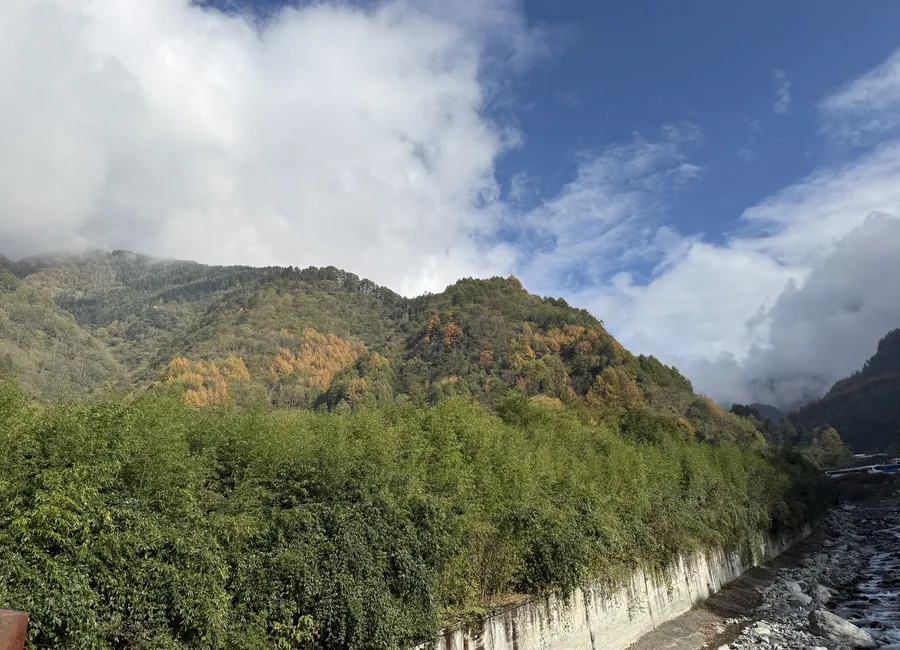
As we leave the Chengdu Plain and cross Dujiangyan, the mountains suddenly block the view.
It doesn’t rise gradually—it appears abruptly. The road climbs along a river, whose current is swift, washing the riverbed stones pale white. Mobile signal flickers on and off, and the altitude meter ticks up one notch at a time.
We arrive in Wolong in the morning. When I stepped out of the car, I expected my first sight would be a panda.
Instead, I saw mountains.
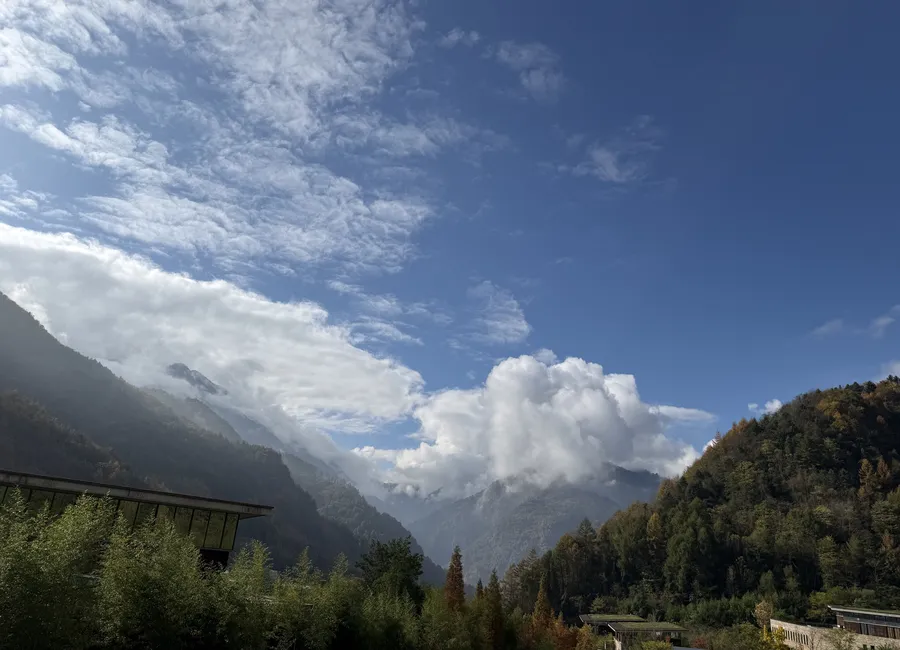
Fir trees grow layer upon layer upward, bamboo forests spread across the slopes, and clouds drift between them. The air is cold, carrying the scent of damp wood. Standing by the roadside, I realized one thing: this is not a zoo. This is the panda’s home—and I am the guest.
A bundle of bamboo
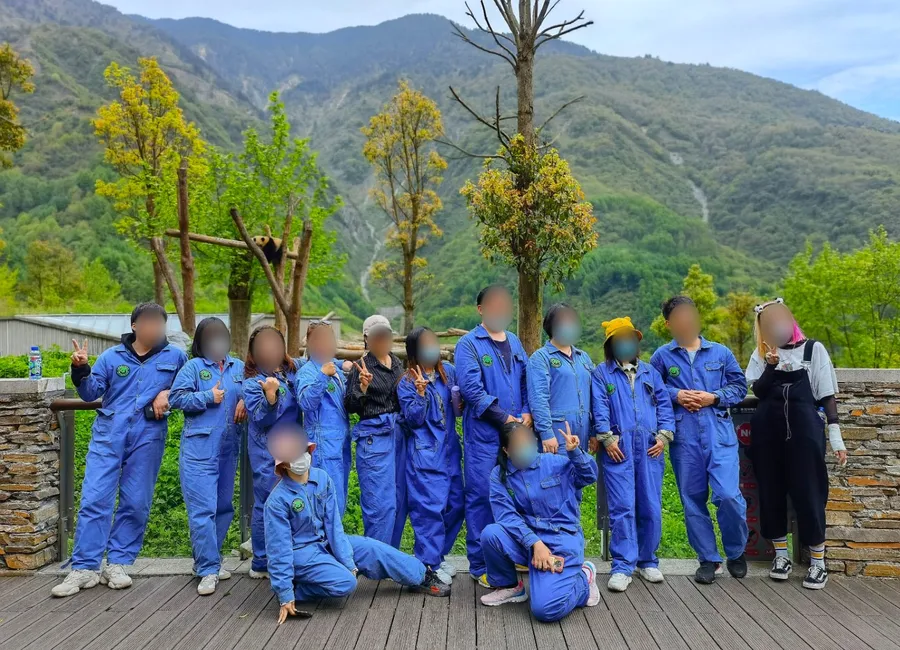
The training at the base isn’t long: sign the agreement, receive work clothes, put on gloves.
In the morning, accompany the keepers delivering bamboo. Cut into lengths over a meter long, bundled together, heavy when carried. The panda sits there, takes it, holds it sideways like someone eating a sugarcane, peels off the outer layer, eats only the inner part, then drops the rest beside its feet.
One bundle of bamboo is quickly gone.
In the afternoon, attending a dietary lecture, I finally understood why they eat so constantly. A panda’s digestive system remains that of a carnivore: short and simple, lacking the multi-chambered stomach of cows and sheep. They eat bamboo but absorb very little of it. Thus, they spend ten or more hours each day feeding, consuming thirty to forty kilograms, just to meet their basic needs.
The class covered bamboo species: arrow bamboo, walking-stick bamboo—different parts eaten in different seasons: shoots in spring, leaves in summer, stems in winter. Pandas are picky eaters. Though a mountain may host over a dozen bamboo types, they usually eat only a few; the rest remain untouched.
Then came making steamed buns: cornmeal, rice flour, trace elements, mixed with water into dough. Hands were covered in flour, sticky and hard to handle. After steaming, the buns turned dark brown, slightly larger than a fist, portioned according to each panda’s needs.
I asked the keeper, is this all your daily work?
He said no. Every panda’s intake that day—how much eaten, how much left, their mood, activity level—must be recorded. If any panda shows signs of abnormality, the first to notice is often not the veterinarian, but the person who delivers bamboo in the morning.
I’ve remembered that sentence for a long time.
That day, I realized: seeing pandas and understanding pandas are two entirely different things. The former requires only eyes—twenty minutes suffice. The latter demands hands-on involvement, repetition, and enough time spent in the mundane routines.
Traces left on the mountain
The next day we headed higher. We put on hiking boots and followed a field researcher.
At around two thousand meters elevation. After every stretch of walking, we needed to pause briefly—not because we were tired, but because the air was thin and breathing lagged behind.
The teacher walked steadily, pointing as he went: this is arrow bamboo, this is walking-stick bamboo. This patch has been recently chewed—the break is fresh. This pile of droppings is still moist, meaning it passed through not long ago.
I asked him, have you ever seen a wild panda?
He replied, in the past decade, only three or four times in the wild.
Then how do you know there are pandas in the mountains?
He crouched down and pointed at a bamboo stump: diagonal cut, about forty-five degrees, clean surface—this is a panda’s bite. Cattle and sheep leave torn, jagged breaks at lower angles.
There are also claw marks high on tree trunks—over a meter above ground. Whether droppings fall on the slope or below reveals direction of travel. And bamboo density matters too: too dense, and it can’t squeeze through; too sparse, and there’s no cover—so it won’t come near.
They can hardly see the pandas, but they can read the traces left by pandas on the mountains.
That day we walked for four hours without seeing a single one. But I knew it was there. This kind of knowing is more reliable than seeing.
Another kind of trace in the mountains
Descend the mountain, enter the village.
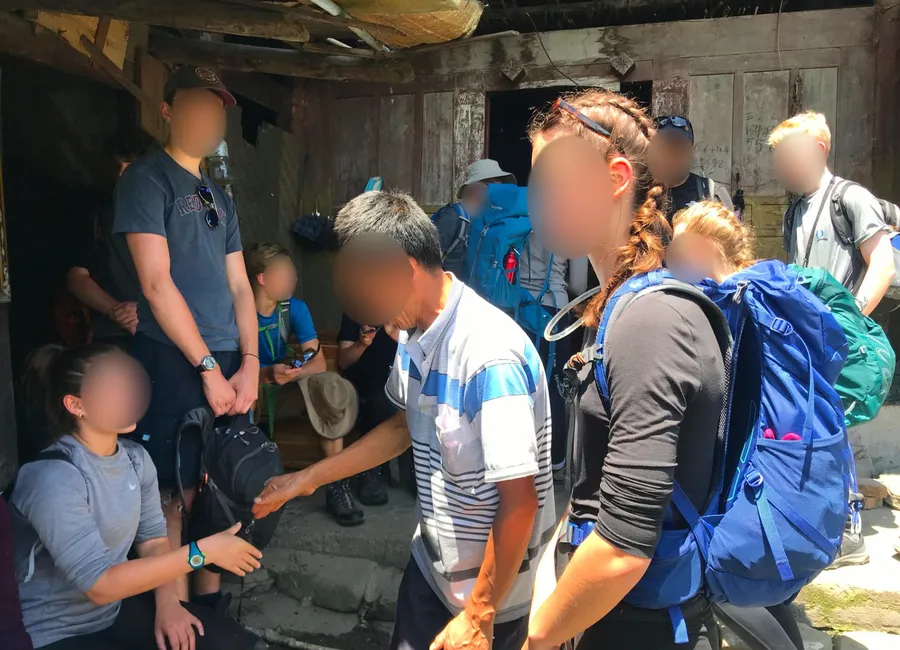
This part of the journey is not usually arranged. The national park isn't just home to pandas—it's also inhabited by thousands of residents. They grow corn, plant plums, keep bees, and raise cattle and sheep.
Sitting in the yard of a local household, I heard these figures for the first time:
A four-year-old cow is worth between five and six thousand yuan. If killed by wild animals, insurance pays only 1,800 yuan. Wild boars root up cornfields and also kill sheep. Civets kill chickens. When plums ripen, wild boars knock trees down with their bodies to shake the fruit loose.
To villagers, these animals were once pests.
But an even bigger problem lies elsewhere. In panda habitats, people still graze livestock. Cattle and sheep eat bamboo and trample bamboo forests, leaving vast areas bare. In Wolong, horse grazing has already been banned because horses strip cold arrow bamboo from top to root. Cattle and sheep have not yet been banned.
Why not?
Because if banned, these families would lose their income.
Wan Fugui is a local resident and chairman of the Wolong Panda Habitat Conservation and Community Sustainable Development Association. He once told me something I’ve remembered for a long time: No ordinary people have grown rich because of panda conservation.
When he was a child, wild boars, civets, Chinese serows, and red-bellied pheasants lived in the shrubs behind his house, coming out at night to damage crops. To feed his family, they cleared the shrubs away.
He said this wasn’t intentional destruction—it was simply survival.
Later, a British birdwatcher hired him to drive. He didn’t understand: Why would foreigners travel so far just to watch birds? Birds aren’t edible. But the pay was high, so he went. While the birdwatchers observed birds outside, he slept in the car.
Over time, he bought binoculars and a camera. Eventually, he could lead tours himself.
Only then did he realize that the things he’d grown up seeing—ordinary to him—were worth flying ten thousand kilometers to witness.
Five years ago, he fenced off the hillside where he used to graze livestock, planting bamboo, medicinal herbs, and wild fruit instead.
In 2021, a villager filming while herding sheep captured footage of a wild panda walking outside the fence.
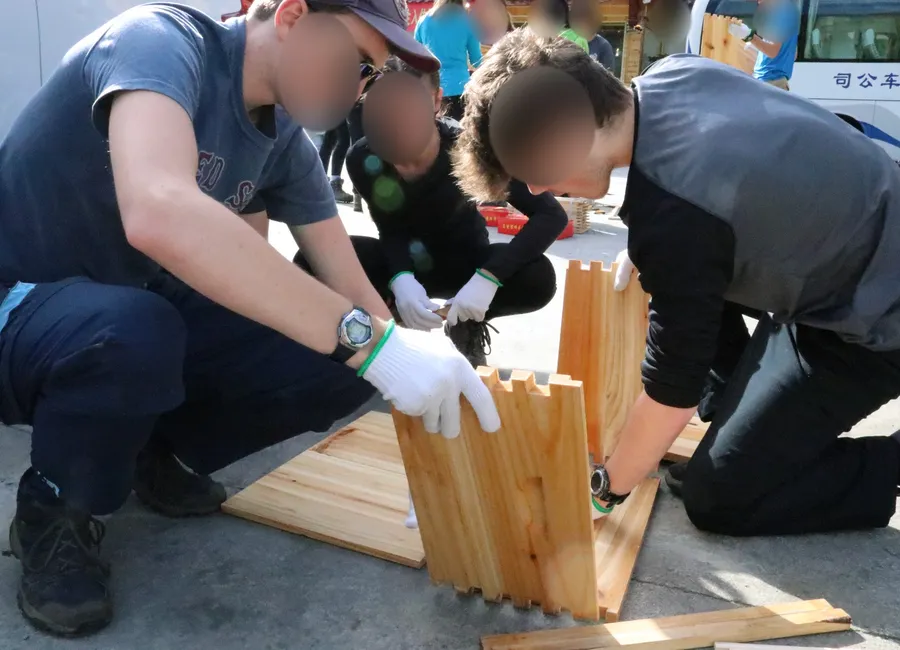
The weight of a beehive
The village is promoting beekeeping.
The logic is simple: make a beehive, give it to farmers still grazing livestock. The association signs an ecological protection agreement with the farmers; honey has a market and is sold at fair prices.
When income from beekeeping exceeds income from grazing, the family must make a choice: sell the cattle and sheep or not.
Sell them, and that mountain area becomes free—bamboo forests can regenerate naturally.
This isn’t about persuasion. It’s about offering another path.
That day I learned how to build a beehive: wooden boards, nails, frames. Splinters pierce my hands—I pull them out. After finishing, I coat the boxes with tung oil and line them up in the yard.
They’ll be carried up the mountain and placed where nectar sources exist. Months later, the hives will contain honey. Years from now, that mountain may no longer have any cattle.
Tourists have a role in this, but not the role of 'I’m here to save the world.' Instead, it’s that one box you made remains on some mountain, one patch of bamboo you planted survives on some slope. You don’t know what happens next—but it’s there.
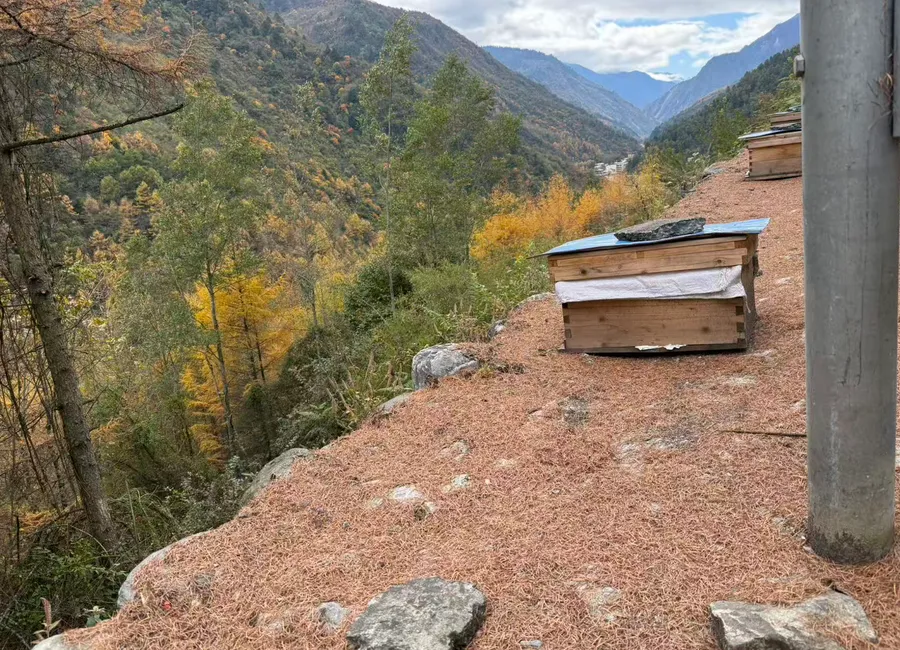
Descend the mountain
Fog rises again.
What I saw along this path wasn’t beautiful: a broken pile of feces, a bamboo stalk cut diagonally, a scratch over a meter high, a wooden box coated in tung oil.
None of it is suitable for social media.
But they are real.
More than 150 years ago, a French missionary first encountered this black-and-white animal in Baoxing, sending its skin back to Paris. Europeans refused to believe such a creature existed. In 1963, Wolong established a nature reserve. In 1980, it joined the World Network of Biosphere Reserves. In 2006, the Sichuan Giant Panda Habitat was inscribed as a UNESCO World Natural Heritage Site. In 2016, the International Union for Conservation of Nature downgraded the giant panda from 'Endangered' to 'Vulnerable'—newspapers declared the conservation effort a success.
There’s another half to these numbers.
The fourth national survey of giant pandas found over 1,800 wild individuals divided into 33 separate regions. Of these, 18 populations number fewer than ten animals each.
Ten. One population. They cannot move out, and no other pandas can come in.
So what we’re doing here today is no longer just confiscating hunting guns. It’s restoring bamboo forests, building ecological corridors, reconnecting mountains that have been split apart.
And there’s an even harder task: how to help people living in the mountains live better because of conservation.
This issue isn’t unique to China. Wherever there are protected areas worldwide, there is grazing—and conflicts between people and wildlife.
Wolong is trying an answer: turn conservation into income, and reinvest income back into conservation.
The answer isn't complete yet. But that panda outside the fence has already come in once.
If you're willing to stay an extra day or a few days
Most people’s panda visit lasts only twenty minutes: drive to the panda base, queue to enter, look through glass as it eats bamboo, take photos, then leave.
There’s nothing wrong with that. It’s worth those twenty minutes.
But if you’re willing to stay an extra day or a few days, Wolong will offer you something else.
You’ll learn how long a bundle of bamboo can last. You’ll understand what a diagonal cut on a bamboo stalk means. You’ll grasp what a family faces after a cow dies. You’ll build a beehive that might sit on some mountain for years.
You won’t take home a photo with a panda. Close contact is not allowed here—anyone claiming otherwise is lying.
You’ll take home something different: a number, a location, a name. And years later, a letter telling you what the first honey of this year tasted like, and how much taller the bamboo has grown on the mountain.
You come here not just to see pandas. You’ll spend a few days living right next to them.
Note:
This visit was invited by the Wolong Giant Panda Habitat Conservation and Community Sustainable Development Association and President Wan Fu Gui. All community projects, conservation agreements, and survey data mentioned in this text are sourced directly from the association and local residents.
Contact us now to plan your private journey
We are available 7 days a week, 24 hours a day to provide you with high-quality, professional service.
Start planning
Scan with your phone to follow.