
Culture, Cuisine, Life
Leshan-Meishan Twin Cities Journey
Understand Sichuan Between Two Cities
Alex ZHANG · Updated at:
From Chengdu, taking the high-speed train, you'll pass through two distinctly different Sichuan cities within forty minutes. One is Leshan, home to the world's largest stone Buddha; the other is Meishan, the hometown of Su Dongpo, China's most beloved ancient poet. These two cities are only twenty minutes apart by train, yet represent two seemingly contradictory but actually complementary aspects of the Sichuan spirit. A three-day itinerary might be enough to explore the scenery and savor the cuisine, but even deeper insights come from quietly touching upon the two attitudes Sichuan people hold toward fate.
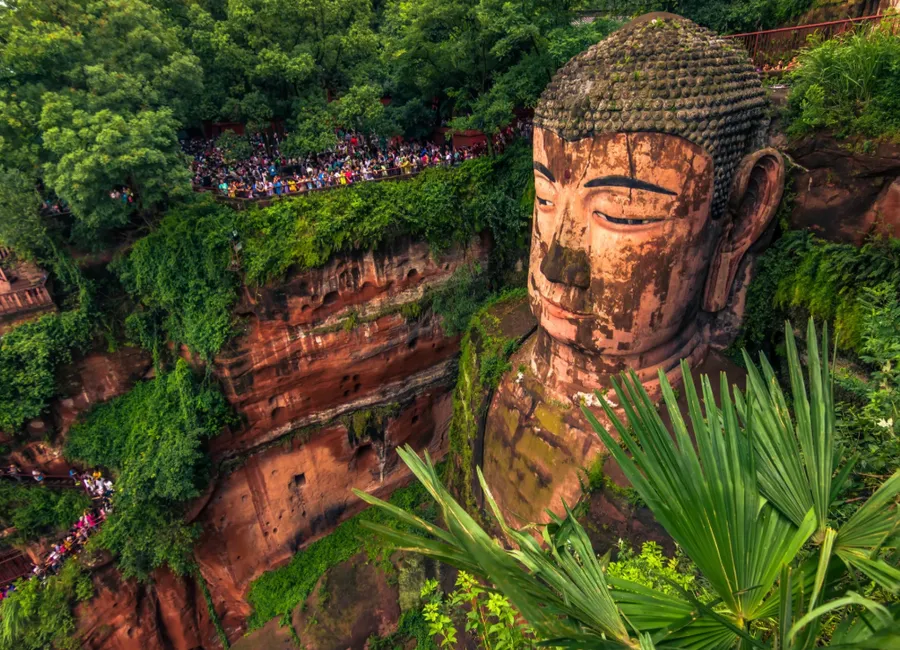
Leshan: Stone Teaches Reverence
The entrance to the Leshan Giant Buddha is unassuming, hidden behind a grove at the foot of the mountain. Only when you descend along the steep Nine-Bend Cliff Path does the Buddha’s face gradually emerge from the cliffside—first the hair bun, then the forehead, eyes, nose—until you truly understand what 'awe' means.
Standing 71 meters tall—about equivalent to a 24-story building—his foot alone can accommodate over a hundred people. Yet he is not imposing; his eyes are lowered, with a faint, almost imperceptible smile on his lips. He has sat here for 1,300 years, watching the confluence of three rivers below: the Minjiang, Qingyi River, and Dadu River, where the water flow was treacherous and countless shipwrecks occurred in ancient times.
The local guide shared a story that left all visitors silent. In the early years of Emperor Xuanzong’s Kaiyuan era, a monk named Hai Tong decided to carve a Buddha into the mountain to pacify the floods. He traveled far and wide collecting donations, but local officials demanded bribes. Hai Tong said, 'I can give you my eyes, but I will never hand over the Buddha’s treasures.' With that, he gouged out his own eyes. Moved by his devotion, generations of artisans continued carving. Ninety years later, the Buddha was finally completed—but Hai Tong never lived to see it.
Standing on the platform beneath the Buddha’s feet and looking up, you feel a complex emotion: how insignificant humans appear before nature’s grandeur, yet it is precisely these small beings who, through ninety years of labor and two eyes, accomplished a feat worthy of standing shoulder to shoulder with the mountain. This feeling, perhaps, is reverence.
After descending, returning by boat on the river, another scene unfolds. The entire Lingyun Mountain resembles a giant sleeping Buddha, with the Leshan Giant Buddha perfectly positioned at the chest area of the mountain—like the heart of this slumbering giant. The sound of the river roars like thunder, and two Buddha silhouettes overlap in the shimmering waves.
Thus, Leshan’s character is clear: the boldness brought by the convergence of three rivers, and the vibrant street life nurtured by its port culture. People here have seen great floods and storms, so they live directly and openly.
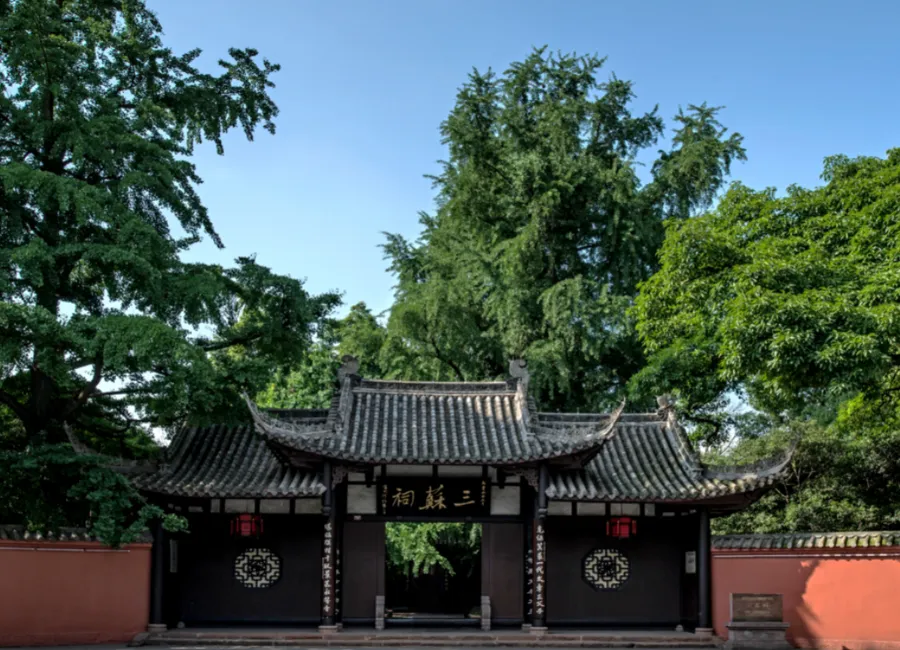
Meishan: Ink Teaches Composure
After leaving Leshan station and boarding the high-speed train again, after twenty minutes, the river slows down and the fields become neatly arranged. The train announces: Meishan East.
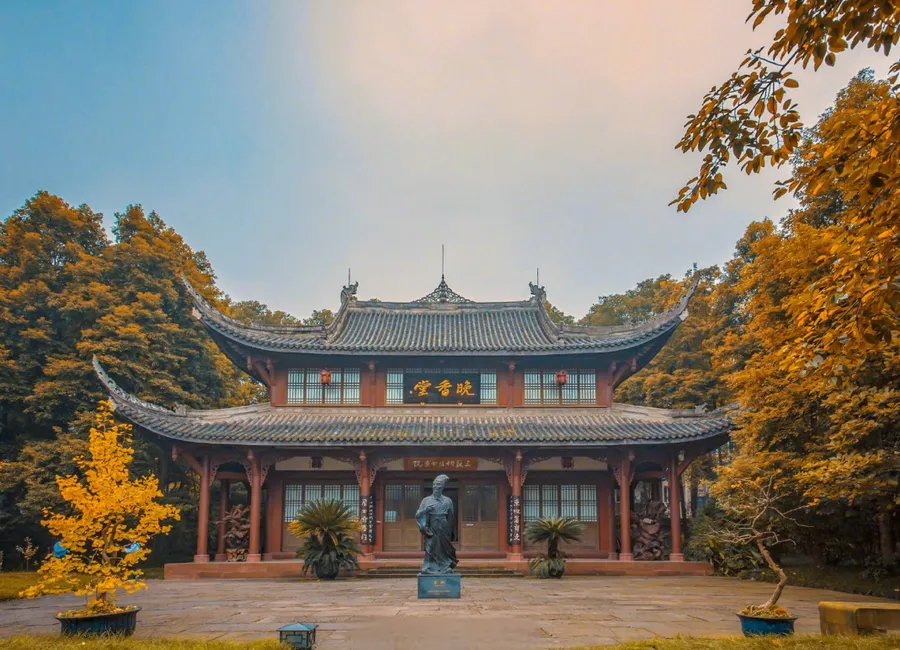
If Leshan is a statue of a Buddha, Meishan is a sheet of rice paper. Its soul lies not in stone, but in a simple courtyard—the San Su Temple, the ancestral home of the three literary giants: Su Xun, Su Shi, and Su Zhe.
Stepping through the red gate, ancient trees shade the courtyard, their canopy blocking out the sky. The oldest banyan tree is nearly a thousand years old, said to have been planted by Su Dongpo himself. Bamboo shadows sway under the eaves, and the red walls are weathered and cracked. Moving deeper, ancient wells, stone tablets, and lotus ponds unfold one after another. A young Sichuan woman serves as our guide. She says: This garden has endured wars and rebuilds, but there has always been someone guarding it. The San Su Temple is like a metaphor for Meishan—what truly matters never fades away with time.
Who was Su Dongpo? He is known throughout China, yet hard to explain clearly to outsiders. Simply put, he was the greatest poet, essayist, calligrapher, and painter of the 11th century—and also an extremely poor political player. His life was entangled in political struggles, repeatedly demoted and exiled to places now known as Hubei, Guangdong, and Hainan—places considered near the edge of the world back then.
Yet he never became bitter. On the contrary, it was precisely during his darkest moments that he wrote lines that still warm the heart today. Exiled to Huangzhou, he farmed during the day and wrote poetry at night, inventing 'Dongpo Pork.' When exiled to Hainan, he taught school and even began experimenting with making hats from coconut shells.
He left behind two phrases, still quoted repeatedly in Chinese life today.
One is 'A single straw raincoat, I walk through life’s storms with ease'—wearing just a straw cloak, walking calmly through every storm and mud of life.
The other is 'Wherever my heart finds peace, that is my homeland'—wherever your heart can settle, that is home.
These words aren’t complicated, yet they surpass thousands of words. Born in life’s darkest hour, they offer a light that has illuminated countless ordinary lives for a thousand years. Standing beneath the ancient banyan tree Su Dongpo once planted, I suddenly understood why such a small city as Meishan holds such profound weight in Chinese culture. It doesn’t teach you how to conquer anything—it teaches you how to settle.
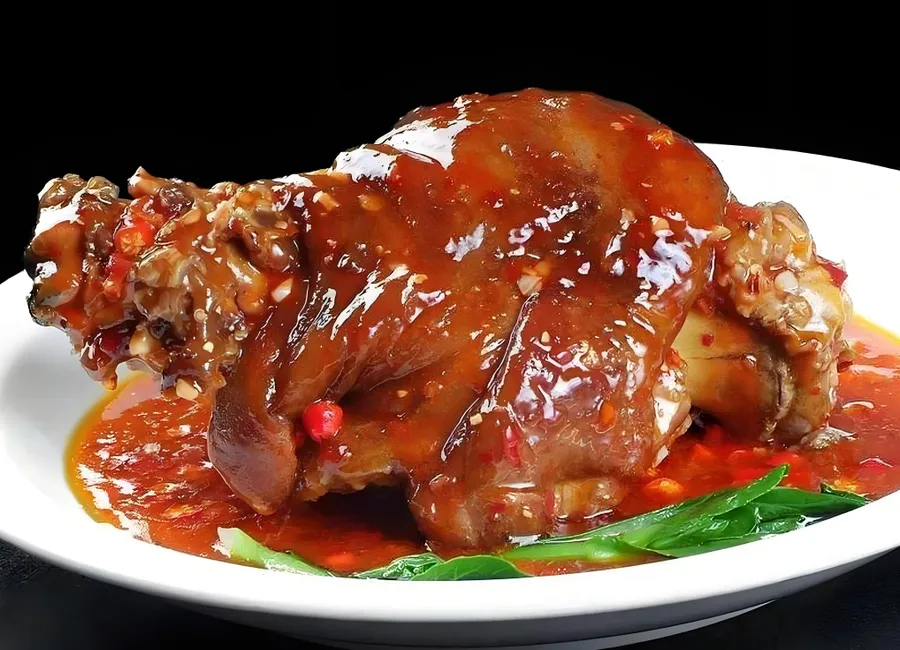
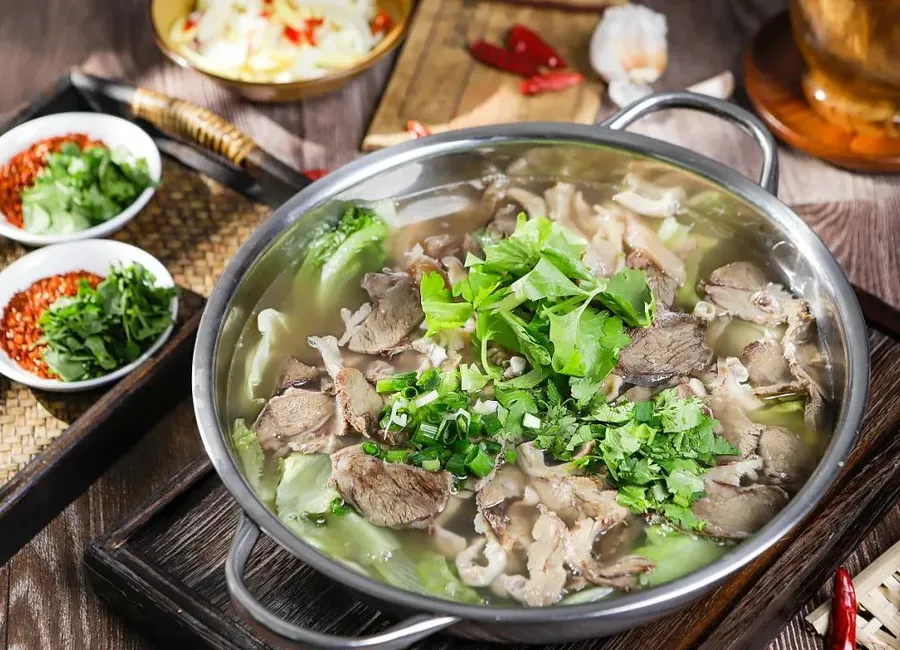
The Taste Between the Two Cities
Returning from Meishan to Leshan in the evening, I visited Suji Ancient Town. By the banks of the Qingyi River, beneath an old stone bridge, people sit casually at low tables, each with a bowl of Qiāojiǎo Beef. The name sounds odd, and its origin is humble: long ago, dockworkers and rickshaw pullers would gather after work, resting one foot on the bench crossbar while drinking a bowl of beef offal soup. The broth is simmered for hours with over a dozen Chinese herbs and beef bones—clear, fragrant, and savory. The beef is sliced incredibly thin, dipped in chili powder and Sichuan peppercorns, and eaten in one bite, leaving you slightly sweating.
This flavor is entirely different from Dongpo Pork. The latter comes from noble origins—rich but not greasy, drizzled with tangy-sour sauce, garnished with minced ginger and green vegetables, like a poem you can eat. The former is a folk ballad from the docks, simple and hot, food made for laborers.
Placing these two flavors together on the same journey is like the metaphor of Leshan and Meishan: one born from rivers and cliffs, the other from study rooms and bamboo groves; one evokes reverence, the other composure.
At night, I sat at Zhanggong Bridge Food Street in Leshan and ordered half a sweet-skinned duck and several skewers of fried snacks. The duck’s skin turns deep reddish-brown in the oil, brushed with maltose syrup—sweet first, then the fresh taste of the duck meat. Nearby, iron woks sizzle, filling the air with the aroma of chili and spices. At the next table, several locals drink beer and chat animatedly, their bamboo skewers piled high, forming a miniature bamboo forest.
I opened my phone to look at photos taken earlier that day: this morning I was gazing up at the Buddha’s toes, and by evening I stood beneath Su Dongpo’s bamboo shadows. Between them lies not just a twenty-minute train ride, but two different Chinese responses to the world.
The Two Faces of Sichuan
Three days isn’t long, but to locals, it’s enough to experience both cities.
There's an old saying here: "Visit Leshan to see, visit Meishan to savor." "See" means looking up in awe, marveling at the grand and eternal; "savor" means letting the flavor slowly unfold on your tongue, finding depth and meaning amid everyday life and hardship.
Looking further, these two attitudes seem to permeate Sichuan’s landscapes and daily life: here are China’s most rugged mountains and deepest gorges, yet also the most relaxed teahouses and the most leisurely way of living. Sichuan people have witnessed the grandeur of towering peaks and rushing waters, yet still manage to make life soft and flavorful. Leshan and Meishan are the most concentrated expressions of this dual nature.
As the train returns to Chengdu, the plain spreads out once more, and the lights outside the window grow denser. Suddenly, I realize: perhaps the true meaning of travel isn’t about seeing how many sights, but about rediscovering things you thought you already understood—through unfamiliar land, re-encounter what you believed you knew.
Like reverence. Like composure.
And like how, between a bowl of soup and a piece of pork elbow, lies the truest form of life.
This is Sichuan—a city that makes you lift your head to gaze upward, and another that invites you to lower your head and taste life, separated by only twenty minutes on the high-speed rail.
Here is Sichuan—a city that makes you tilt your head back to gaze upon it, and another that makes you bow your head to savor life. They're separated by just twenty minutes on the high-speed train.
Recommended activities
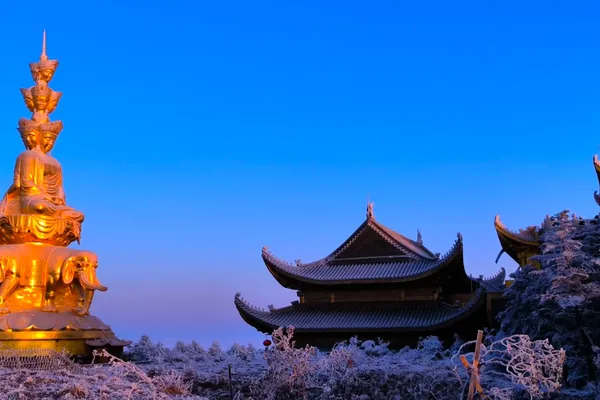
2-day in-depth tour of Emei Mountain and Leshan Giant Buddha: the sacred Buddhist mountain and confluence of three rivers
Hike Mount Emei, breathe in nature, and witness the sunrise at Emei Golden Summit. Savor local delicacies at the foot of the Great Buddha.
Contact us now to plan your private journey
We are available 7 days a week, 24 hours a day to provide you with high-quality, professional service.
Start planning
Scan with your phone to follow.